
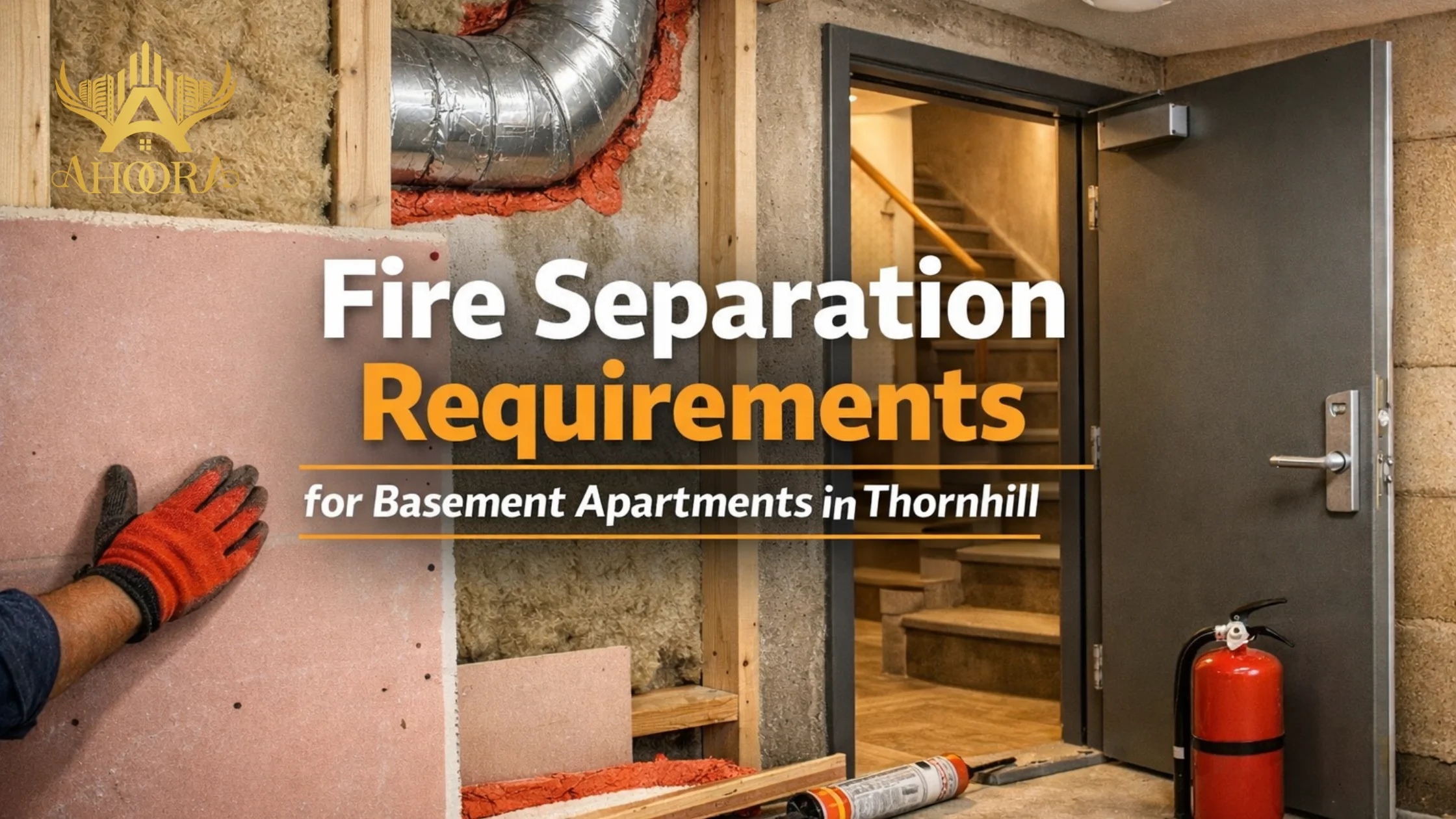
Turning your basement into a rental unit might seem like a relatively straightforward process, but many homeowners who speed ahead without giving it much thought end up hitting a roadblock when it comes to fire safety. The fire separation requirements for basement apartments in Thornhill are probably the most important thing you need to get right if you want to pass inspections, secure permits, and get your second suite to comply with the Ontario Building Code.
In this guide, you’re going to learn what the fuss is all about when it comes to fire separation – where it needs to be, how long it needs to last, and how all this impacts permits, egress windows and inspections in Thornhill.
Why Fire Separation Is Mandatory for Legal Basement Apartments in Thornhill
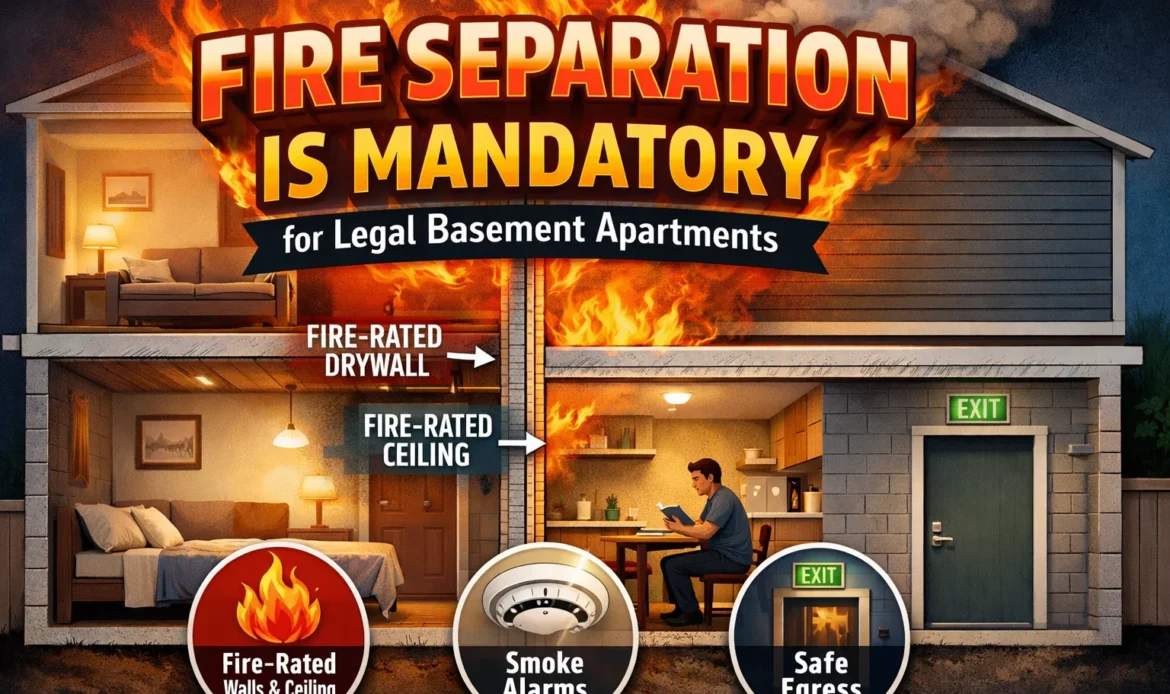
Fire separation is a legal necessity for any second suite in Thornhill – this is just the way it is. Under the Ontario Building Code, a second suite has got to have fire-sealed walls and ceilings separating the basement unit from the main house. What this means is that if there’s a fire, it slows it down giving you and the tenants more time to get out safely.
The fire separation requirements for basement apartments in Thornhill are tied pretty closely to getting your basement renovation permit approved and to the inspectors coming to call. When you submit an application for a basement renovation permit, the people in the city are going to be checking out the fire-resistance rating of your walls and ceiling as well as your doors to see if they pass muster. If you don’t get the grades, then your secondary suite is not going to be approved as a legal second unit.
And guess what – proper fire separation isn’t just about making city officials happy – it’s about safety too. Without it, your basement apartment can’t possibly meet all the fire safety rules that are supposed to be in place – and that means it can’t be legally occupied. So getting this right is just as important as getting the rest of the renovation done, if you want to know.
What Is Fire Separation in a Basement Apartment?
Fire separation is a crucial construction technique that the Ontario Building Code demands to slow down the spread of fire and smoke between two separate living areas. When it comes to a basement apartment, this means beefing up a fire-resistant barrier between the main house and the secondary suite using materials and building assemblies that have been specifically approved.
In simple, non-techie terms, fire separation is about putting up fire-rated drywall on ceilings and walls, protected structural framing, sealing around pipes and ducts, and installing fire-rated doors. The whole package is designed to achieve a minimum fire-resistance rating – usually measured in minutes – which shows how long that barrier can keep going before some serious damage is done.
If you’re planning to turn your basement in Thornhill into a fully legal second suite, then having a real grasp of this concept is pretty vital. The specific fire separation requirements for basement apartments in Thornhill are based on the Ontario Building Code which sets a minimum standard for fire-resistance ratings, including ceilings, walls and shared spaces. If you don’t get fire separation right, your basement apartment wont meet the code and wont qualify as a legal second suite.
Where Fire Separation Is Required in a Legal Basement Apartment
In a legal basement apartment in Thornhill, fire separation is required anywhere the basement unit connects to or shares space with the main dwelling. The goal is to create a continuous fire-resistant barrier between the two living areas, as required under the Ontario Building Code.
1. Between the Basement Ceiling and Main Floor
The most important fire separation area is the ceiling of the basement apartment. This ceiling separates the secondary suite from the main house above. It must meet the required fire-resistance rating using approved assemblies such as fire-rated drywall and protected framing. This is a key part of the fire separation requirements for basement apartments in Thornhill.
2. Shared Walls Between Units
Any wall that divides the basement apartment from the rest of the home must have proper fire-rated construction. This includes walls around stairwells or storage areas that connect both units.
3. Mechanical and Furnace Rooms
If the furnace or mechanical equipment serves both units, the room must be separated with fire-rated walls and doors. Open utility spaces without proper protection can lead to inspection failure.
4. Doors Between Units
Any door that connects the basement apartment to the main dwelling must be fire-rated and properly sealed. In many cases, a self-closing device is required to maintain the fire separation barrier.
5. Openings and Service Penetrations
Electrical wires, plumbing pipes, and ductwork that pass through fire-separated walls or ceilings must be sealed with approved fire-stopping materials. Small gaps can compromise the entire fire-resistance rating.
Egress Window & Emergency Exit Requirements for Basement Apartments in Thornhill
For a legal basement apartment in Thornhill, proper emergency exits are required under the Ontario Building Code. Fire separation slows the spread of fire, but occupants must also have a safe and direct way to escape.
Minimum Egress Window Size
Each basement bedroom must have a window that:
- Provides at least 0.35 m² (3.77 sq ft) of unobstructed opening
- Has no dimension smaller than 380 mm (15 inches)
- Opens fully without tools or special effort
If there is a window well, it must allow enough space for the window to open completely.
Exit Access Requirements
A basement apartment must have a safe exit that leads directly outside. This can be a separate entrance or a code-compliant exit route. The path must remain clear and accessible.
The fire separation requirements for basement apartments in Thornhill must work together with egress rules. During inspection, officials verify both the fire-rated construction and the emergency exit openings. Without proper egress, the unit cannot qualify as a legal second suite under Ontario Building Code standards.
Permits & Inspection Process for Legal Basement Apartments in Thornhill

To create a legal basement apartment in Thornhill, you must obtain a building permit before starting construction. This applies to new secondary suites and major basement renovations. The permit ensures your plans meet Ontario Building Code standards, including fire separation, egress windows, and life safety requirements.
What Must Be Shown in the Permit Application
Your submitted drawings must clearly show:
- Fire separation assemblies between the basement unit and the main dwelling
- Required fire-resistance ratings for walls and ceilings
- Bedroom egress window sizes and exit routes
- Location of smoke and carbon monoxide alarms
City officials review these details to confirm compliance with the fire separation requirements for basement apartments in Thornhill and other applicable code rules.
Inspection Process
Once the permit is approved, inspections take place during construction. Inspectors verify that fire-rated materials, sealed openings, and exit requirements match the approved plans. A final inspection is required before the basement apartment can be considered a legal second suite.
Why Hiring a Professional Basement Renovation Contractor in Thornhill Matters
Building a legal basement apartment in Thornhill is way more involved than just throwing up some walls and slapping in a kitchen. You’re actually dealing with serious requirements here : proper fire separation, the right size egress windows, drawings that pass muster – and getting all that to fly under the Ontario Building Code. Even a small slip-up on fire-rated stuff or exit requirements can leave you waiting for approval and watching your renovation costs balloon.
A pro contractor knows the ins and outs of fire separation requirements for basement apartments in Thornhill, and they make sure the whole shebang gets built to code right from the get-go. From permits to final inspection – all that anxiety and stress goes way down when you’re working with a team that’s got experience. Plus you get to avoid that dreaded failed inspection and all the rework that comes with it.

At Ahoora Homes, we’re all about basement renovations, and we specialise in getting legal second suites built in Thornhill and across the GTA, all to code of course. We really stick to the Ontario Building Code and focus on building safe and compliant. You’re planning a basement apartment and want it done right the first time? Well, get in touch with Ahoora Homes Contact today for a free quote and some expert guidance on your project.
FAQs – Fire Separation for Basement Apartments in Thornhill
-
What are the fire separation requirements for basement apartments in Thornhill?
The fire separation requirements for basement apartments in Thornhill follow the Ontario Building Code. A legal basement apartment must have fire-rated walls and ceilings that separate the unit from the main dwelling. This includes approved drywall assemblies, sealed penetrations, and fire-rated doors where required.
-
How many minutes of fire-resistance rating are required for a basement apartment?
Most legal basement apartments require a minimum 30-minute fire-resistance rating between the basement unit and the main floor. In some cases, higher ratings may be required depending on the home’s layout and construction type. The exact requirement is confirmed during the permit review process.
-
Are egress windows mandatory in a basement bedroom?
Yes, every bedroom in a legal basement apartment must have a code-compliant egress window. The window must provide at least 0.35 m² of unobstructed opening and meet minimum size dimensions. Without proper egress, the basement apartment cannot meet Ontario Building Code standards.
-
Do I need a permit to add fire separation to my basement in Thornhill?
Yes, a building permit is required when creating or upgrading a basement apartment. Fire separation, structural changes, and new exits must be reviewed and approved before construction begins. Inspections are completed to verify compliance before the unit is considered legal.
-
What happens if my basement apartment does not meet fire separation requirements?
If the fire separation requirements for basement apartments in Thornhill are not met, the unit can fail inspection and may not be approved as a legal second suite. You may be required to make corrections before occupancy is allowed. Non-compliance can also affect insurance and property value.