
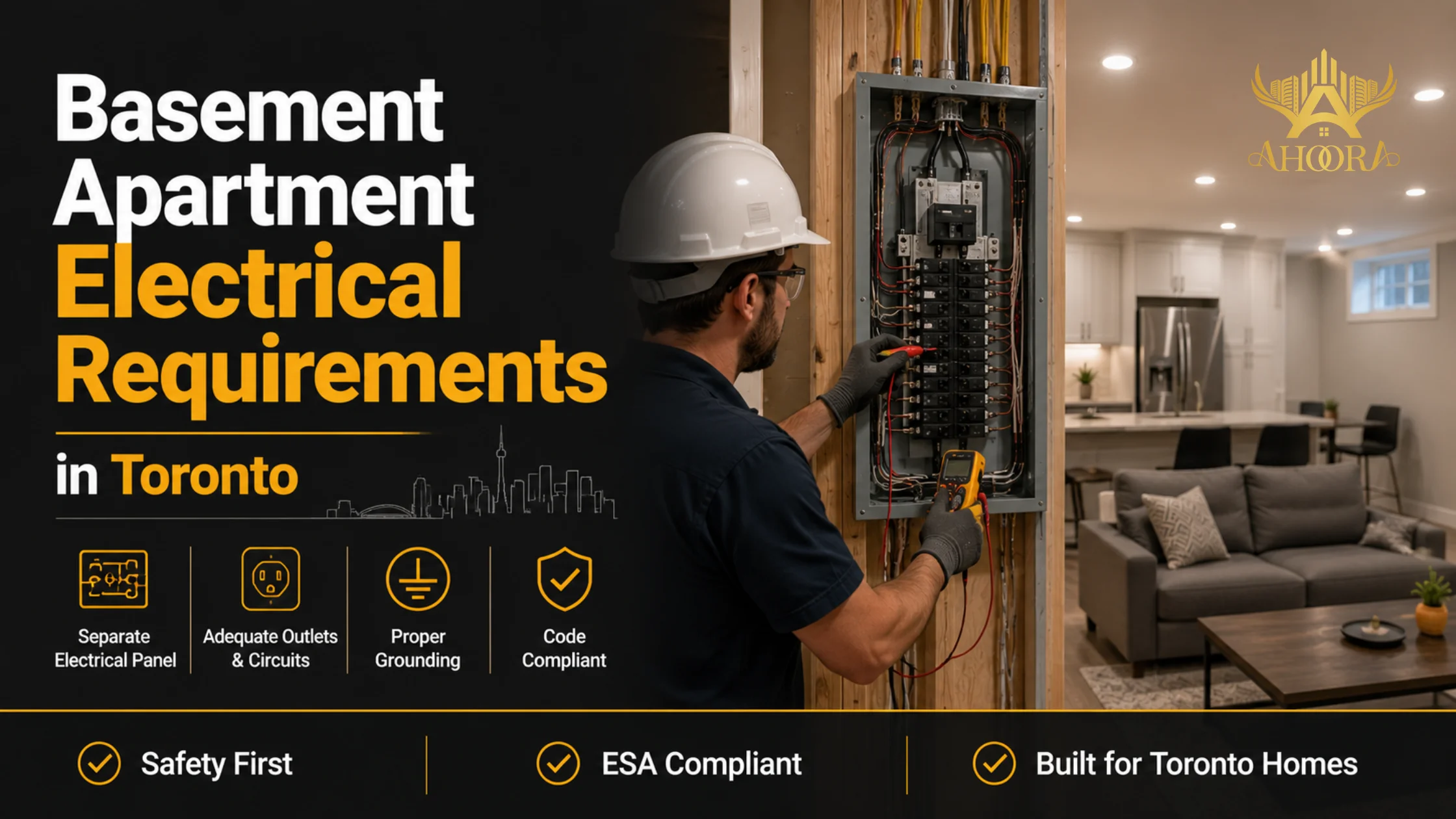
One electrical mishap can, like… stop your basement apartment project before it even gets going. Whether you’re building a new rental space or just finishing your basement, following the basement apartment electrical requirements Ontario is really important if you want to pass inspections, protect your home and also meet the legal rules that apply.
From ESA permits and electrical panel upgrades to where outlets go, dedicated circuits, lighting, and smoke alarms, there are a bunch of code requirements you need to follow. This guide walks you through it all in simple Canadian English, so you can plan your renovation with some peace of mind and avoid expensive headaches later.
What Are the Basement Apartment Electrical Requirements in Ontario?
The basement apartment electrical requirements in Ontario are basically the safety rules you have to follow when you build a legal basement apartment or a second unit. Most electrical work has to meet the Ontario Electrical Safety Code (OESC) and it also needs to be inspected by the Electrical Safety Authority (ESA). This is how you help protect your home and your tenants, and make sure the renovation meets provincial expectations.
To meet Ontario electrical code requirements, your basement apartment should include:
- A safe electrical system that can handle the added power demand.
- ESA permits and inspections for most new electrical work.
- Proper wiring installed by Ontario electrical code.
- Dedicated circuits for major appliances like the refrigerator, microwave, laundry, and bathroom.
- GFCI protection in wet areas such as bathrooms and near kitchen sinks.
- AFCI protection in living spaces to help reduce the risk of electrical fires.
- Enough outlets and lighting for each room.
- Hardwired smoke alarms and carbon monoxide alarms where required.
Every basement renovation is different. Older homes in Toronto and the GTA may also need an electrical panel upgrade if the existing service cannot safely support another kitchen, bathroom, laundry area, and additional lighting.
Ontario Electrical Code Requirements for a Legal Basement Apartment
A legal basement apartment must follow the Ontario Electrical Safety Code (OESC), which sets the minimum safety standards for all electrical work in the province. Here are the main Ontario electrical code requirements for a legal basement apartment:
- All new electrical work must comply with the current Ontario Electrical Safety Code.
- Electrical wiring, outlets, switches, and lighting must be installed correctly and safely.
- Major appliances, such as the refrigerator, microwave, laundry equipment, and bathroom outlets, need their own dedicated circuits where required.
- GFCI protection is required in areas where water is present, including bathrooms and near kitchen sinks.
- AFCI protection is required for most living areas to help prevent electrical fires caused by damaged wiring.
- Smoke alarms and carbon monoxide alarms must be installed and connected as required by Ontario regulations.
- Most electrical work must be inspected and approved by the Electrical Safety Authority (ESA) before the project is complete.
These electrical code requirements apply whether you are building a new legal basement apartment, converting an existing basement into a second unit, or completing a major basement renovation. Following the code from the start helps avoid failed inspections, unexpected repair costs, and delays in getting your basement apartment approved.
Do You Need an ESA Permit for a Basement Apartment in Ontario?
Yes, in most cases you need an Electrical Safety Authority (ESA) permit , sometimes called a notification, before you start any electrical work for a basement apartment in Ontario. This usually covers the bulk of projects where you’re dealing with new wiring, adding circuits, putting in outlets, updating the electrical panel or making alterations to the existing electrical setup.
You will typically need an ESA permit if your basement apartment project includes:
- Installing new electrical wiring
- Adding outlets, switches, or light fixtures
- Installing dedicated circuits for kitchen or laundry appliances
- Upgrading or replacing the electrical panel
- Adding a subpanel
- Extending or changing existing electrical circuits
After the electrical work is done, an ESA inspection is usually required to confirm that everything lines up with the Ontario Electrical Safety Code . If it passes inspection, the ESA then issues a Certificate of Acceptance, which basically shows the installation meets provincial safety rules.
Just keep in mind, an ESA permit is not the same as a building permit. Even if your basement renovation has municipal approval, you may still need an ESA permit for the electrical portion, because those are handled separately. We’ll go over that difference in the next section.
Getting the correct permits before starting your basement apartment electrical requirements for your Ontario project helps you dodge failed inspections, expensive fixes, insurance complications, and delays finishing your legal basement apartment.
Basement Apartment Electrical Planning Before Renovation
Good electrical planning can save you time, money and unexpected problems later. Before any work begins, make sure your electrical system can safely support a new basement apartment. Planning ahead also makes it easier to meet the basement apartment electrical requirements in Ontario and pass the required inspections.
Check Your Existing Electrical System
Start by having your current electrical system inspected. Older homes in Toronto and the GTA have limited electrical capacity. If your panel is already close to its limit, you may need an electrical panel upgrade or additional circuits before adding a basement apartment.
Plan the Electrical Layout
Think about where you’ll need power before the renovation starts. A well-planned layout should include:
- Lighting for every room and hallway
- Enough electrical outlets for daily use
- Dedicated circuits for major appliances
- Switches in convenient locations
- Power for heating, ventilation, and exhaust fans if needed
Planning everything early helps reduce changes after construction begins.
Consider Your Future Electrical Needs
Your basement apartment should be designed for both current and future use. If you plan to add appliances, a home office or electric heating later, it’s better to include those electrical needs in the original design instead of update the system after the renovation is complete.
Work With Qualified Professionals
Electrical planning should be completed before framing and drywall begin. Working with an experienced renovation contractor and a licensed electrician helps ensure the wiring, panel capacity and circuit layout meet the Ontario Electrical Safety Code. This reduces the risk of delays, failed inspections and expensive rework later in the project.
What Affects Basement Apartment Electrical Costs in Ontario?
Electrical pricing for a basement apartment really depends on how big the renovation is, and also on how good shape your current electrical setup is. Every place is a little different and yes, it can get confusing fast, but if you start planning your wiring tasks early you can reduce those surprise bills and keep the whole renovation plan running on time.
Here are the usual reasons that influence basement apartment electrical costs in Ontario, in a pretty straightforward way:
Size of the basement apartment
A bigger basement apartment generally means more wiring, more wall outlets, more switches, more lighting points, and sometimes even extra electrical circuits. More bedrooms or living space, plus longer cable routes, usually add time to the job and so the total cost climbs.
Condition of the existing electrical system
Older homes always require upgrades before you can add a basement apartment. If your electrical panel has limited spare capacity or if the wiring is showing age, you may be looking at an electrical panel replacement or additional circuits. This is normally needed to align with Ontario safety and code standards so it’s not something to skip or delay.
Number of Electrical Fixtures and Appliances
The more electrical features you install, the higher the overall cost. This includes:
- Light fixtures
- Electrical outlets
- Kitchen appliances
- Bathroom exhaust fans
- Laundry equipment
- Electric heating systems
Each of these may require additional wiring or dedicated circuits.
Permit and Inspection Requirements
Most projects that involve new electrical work require an ESA permit and electrical inspections. These are an important part of meeting the basement apartment electrical requirements in Ontario and ensuring the installation complies with the Ontario Electrical Safety Code.
Complexity of the Installation
Electrical costs can also increase if the project involves difficult access, major layout changes, relocating the electrical panel, or installing new circuits throughout the basement. More complex renovations require additional labour and materials.
Planning your electrical system before construction begins is one of the best ways to manage costs. A clear renovation plan helps reduce changes during the project, avoids unnecessary work, and ensures your basement apartment is safe, code-compliant, and ready for inspection.
Why Homeowners Across Toronto Trust Ahoora Homes for Code-Compliant Basement Renovations
A good basement apartment renovation kind of starts with planning and it kind of ends when the space is safe, useful and meets Ontario building , and electrical requirements. At Ahoora Homes, we guide homeowners across Toronto and the GTA to finish basement renovations that are code-compliant, and that actually make sense for everyday living.
From the first design conversation all the way to the last inspection, we coordinate each step. Our crew works with licensed trades, pays attention to Ontario basement apartment electrical requirements, and keeps the project moving on time. That way you avoid the annoying expensive errors, and the delays that can really drag things out.
Why homeowners choose Ahoora Homes:
- Complete basement apartment renovations from planning to completion
- Code-compliant renovations that meet Ontario requirements
- Coordination with licensed electricians and qualified trades
- Clear communication and transparent project management
- High-quality craftsmanship with attention to detail
- Trusted by homeowners across Toronto, North York, Richmond Hill, Aurora, and the GTA
Whether you’re building a legal rental unit or adding more living space, Ahoora Homes delivers basement renovations that are designed for long-term safety, comfort and value.
Frequently Asked Questions About Basement Apartment Electrical Requirements in Ontario
-
Do I need an ESA permit for a basement apartment in Ontario?
Yes. Most basement apartment projects that involve new wiring, outlets, lighting, electrical panels or new circuits require an ESA permit before work begins. After the work is completed, an ESA inspection is usually required to confirm the installation meets the Ontario Electrical Safety Code and is safe for occupancy.
-
Does a basement apartment need a separate electrical panel in Ontario?
No, a separate electrical panel is not always required. However, if your existing panel cannot safely support the additional electrical load, an upgrade or subpanel may be needed. A licensed electrician can calculate your home’s electrical capacity and recommend the right solution.
-
What electrical code requirements must a legal basement apartment meet in Ontario?
A legal basement apartment must comply with the Ontario Electrical Safety Code. This includes safe wiring, dedicated circuits where required, GFCI and AFCI protection, proper lighting, smoke and carbon monoxide alarms, and ESA inspections for most new electrical work to ensure the installation meets provincial safety standards.
-
Can I do the electrical work for my basement apartment myself?
Homeowners may be allowed to perform some electrical work on their own property, but it must still comply with the Ontario Electrical Safety Code and usually requires an ESA permit and inspection. Because basement apartments involve strict safety requirements, hiring a licensed electrician is the safest option.
-
How can I avoid failing an ESA electrical inspection?
Plan your electrical work before construction starts, obtain the required ESA permit, use the correct wiring and dedicated circuits, install GFCI and AFCI protection where required, and have all work completed to Ontario code. Working with experienced renovation professionals greatly improves your chances of passing the inspection the first time.