
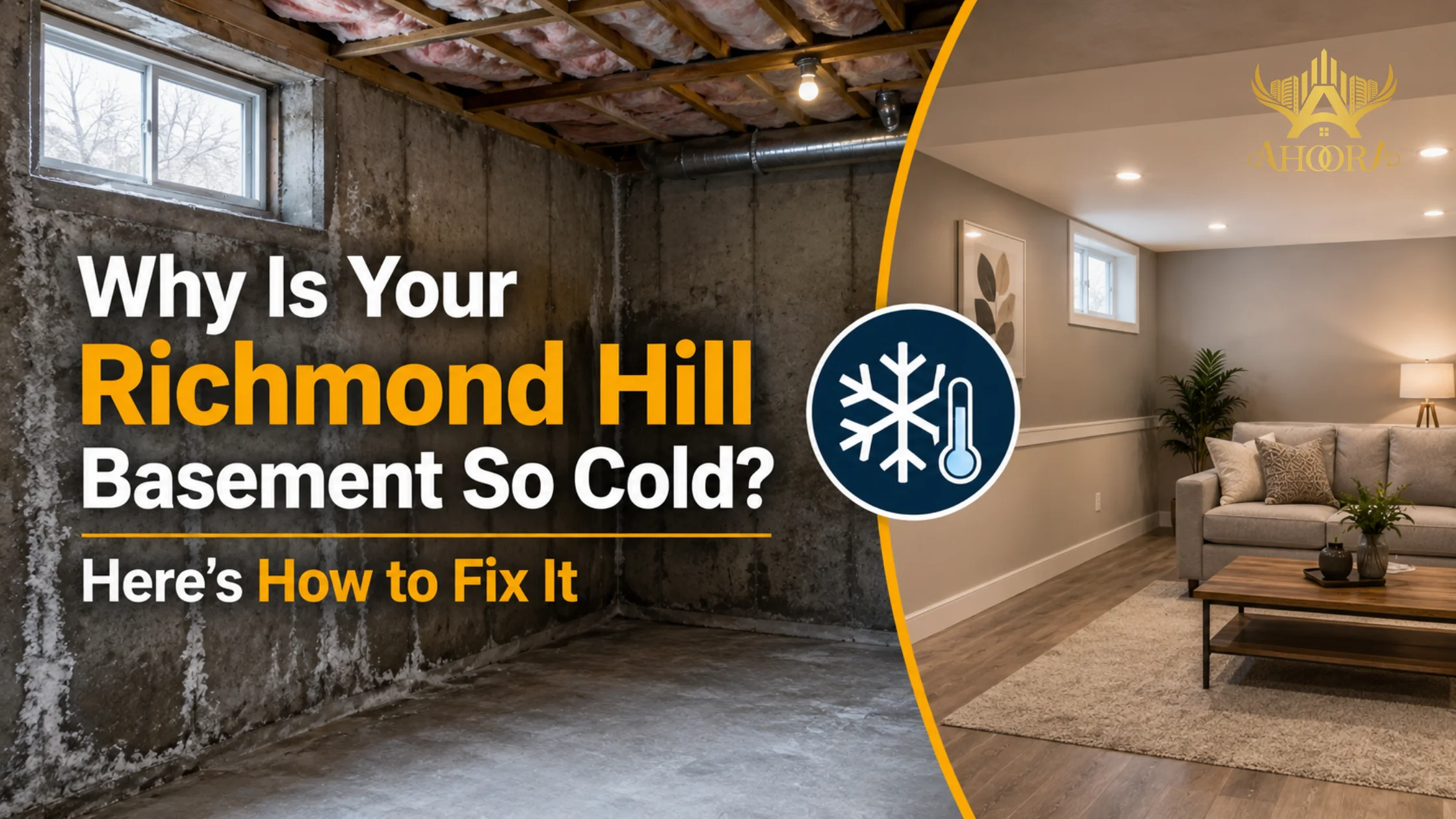
Does your basement feel cold every winter, no matter how high you turn up the heat? You are not alone. Many homeowners in Richmond Hill deal with a cold basement in winter, making the space uncomfortable and harder to enjoy.
The good news is that there is usually a clear reason behind the problem. From poor insulation to hidden air leaks, several issues can make a basement colder than the rest of the house. In this guide, we will look at the most common causes and simple renovation solutions that can help make your basement warmer and more comfortable.
Why Do Richmond Hill Basements Get So Cold in Winter?
One of the biggest reasons for basement heat loss is that most basement walls are surrounded by cold soil during winter. Concrete foundation walls naturally transfer heat and if there is little or no foundation wall insulation, warmth escapes from the basement more quickly. Older homes in Richmond Hill may also have outdated insulation that no longer provides enough protection against cold weather.
Another common issue is air leakage. Small gaps around basement windows, utility openings, doors and rim joists can allow cold outdoor air to enter the home. Even tiny openings can create drafts and lower the basement temperature. When these gaps are combined with poor air sealing, homeowners always notice cold spots near walls, windows and corners.
Since warm air naturally rises to the upper floors, basements always receive less heat than the rest of the home. When poor insulation, cold air infiltration, moisture issues and an inefficient HVAC system occur together, the result is a basement that stays cold throughout the winter. Identifying these causes is the first step toward creating a warmer, more energy-efficient space.
4 Common Reasons Your Basement Feels Cold During Winter
If you have a cold basement in winter, there is naturally more than one reason behind it. Heat can escape from different parts of the basement, making the space uncomfortable and increasing your heating costs. Here are four of the most common causes homeowners in Richmond Hill face.
Poor Basement Insulation
Insulation helps keep warm air inside your home. When basement walls have little insulation or older materials that no longer work well, heat escapes through the foundation. This is one of the biggest causes of basement heat loss in older Richmond Hill homes. Poor insulation can also leave walls feeling cold to the touch during winter.
Air Leaks Around Windows, Doors, and Rim Joists
Small gaps may not seem like a big problem, but they can let a surprising amount of cold air into your basement. Areas around basement windows, utility openings, doors and rim joists are common places for air leakage. These drafts can make certain parts of the basement feel much colder than others and force your heating system to work harder.
Cold Concrete Floors and Foundation Walls
Concrete naturally absorbs and transfers cold temperatures from the ground outside. Without proper foundation wall insulation or an insulated subfloor, basement floors can stay cold throughout the winter. Many homeowners notice that even when the room feels warm, the floor remains uncomfortable to walk on.
Moisture Problems and Poor Air Circulation
A damp basement often feels colder than a dry one. Moisture can reduce the effectiveness of insulation and create a chilly indoor environment. At the same time, poor airflow from an outdated HVAC system or missing cold air return vents can prevent warm air from reaching the basement evenly. This combination often leads to cold spots, higher humidity levels, and reduced energy efficiency.
Best Basement Heating Solutions for Richmond Hill Homes
If your basement stays cold even after improving insulation and sealing air leaks, it may be time to look at your heating system. The right heating upgrades can make a big difference and help eliminate a cold basement in winter. Here are some of the most effective solutions for Richmond Hill homes.
Extend Existing HVAC Ductwork
Basements receive less warm air than the upper floors because the ductwork was not designed to heat the space properly. Adding or upgrading supply vents can improve airflow and help distribute heat more evenly throughout the basement.
Install Cold Air Return Vents
A heating system works best when warm air can circulate freely. Without enough cold air return vents, warm air may become trapped in certain areas while other parts of the basement remain cold. Adding return vents can improve airflow and help maintain a more consistent temperature.
Consider Radiant Floor Heating
Cold concrete floors are a common complaint among homeowners. Radiant floor heating places heating elements beneath the flooring, providing gentle and even warmth from the ground up. This solution is especially popular in finished basements where comfort is a top priority.
Upgrade to a High-Efficiency Heating System
Older furnaces and heating equipment may struggle to keep the basement comfortable during Ontario winters. A modern, energy-efficient HVAC system can provide better heating performance while reducing energy use. This can help lower heating costs and improve overall home comfort.
Use a Smart Thermostat
A smart thermostat allows homeowners to better control indoor temperatures throughout the day. Some systems can be programmed to maintain comfortable temperatures in lower levels of the home, helping reduce temperature differences between the basement and upper floors.
How Much Does It Cost to Fix a Cold Basement in Richmond Hill?
The cost of fixing a cold basement in winter depends on what is causing the problem. Some homes only need air sealing or insulation upgrades, while others may require waterproofing, HVAC improvements or a larger basement renovation in Richmond Hill project. Addressing the root cause is often more cost-effective than relying on space heaters or temporary fixes.
Typical Costs to Improve a Cold Basement
| Upgrade | Estimated Cost Range |
| Air sealing and draft repairs | $500 – $2,000 |
| Basement wall insulation | $2,000 – $8,000+ |
| Rim joist insulation | $1,000 – $3,000 |
| Basement waterproofing | $2,500 – $15,000+ |
| HVAC ductwork upgrades | $1,500 – $5,000+ |
| Radiant floor heating | $10 – $20+ per sq. ft. |
| Full basement renovation | $35,000 – $100,000+ |
What Upgrade Gives the Best Value?
For many homeowners, improving basement insulation, sealing air leaks and adding proper foundation wall insulation provide the biggest improvement for the lowest cost. These upgrades help reduce basement heat loss, improve energy efficiency and make the space more comfortable throughout winter.
Professional Basement Renovation Tips from Ahoora Homes
If you have a cold basement in winter, focus on stopping heat loss before upgrading your heating system. Poor basement insulation, air leaks around windows and rim joists and uninsulated foundation walls are some of the most common reasons basements stay cold. Fixing these issues can improve comfort and reduce energy waste.
It is also important to address moisture, ventilation and heating together. Combining basement waterproofing, proper air sealing and HVAC improvements helps create a warmer and more energy-efficient basement. A well-planned basement renovation in Richmond Hill project can turn an uncomfortable basement into a comfortable living space that can be enjoyed all year.
If your basement feels cold every winter, Ahoora Homes can help. Contact our team today for a professional assessment and learn the right renovation solutions for a warmer, more comfortable home.
Frequently Asked Questions
-
Why is my basement so cold in winter?
A basement is often colder because heat escapes through foundation walls, concrete floors, windows, and air leaks. Since warm air rises, the basement naturally receives less heat than upper floors. Poor insulation and moisture problems can make the space feel even colder during winter.
-
How can I make my basement warmer in winter?
The best way to warm a basement is by improving insulation, sealing air leaks, and upgrading heating and ventilation systems. Adding foundation wall insulation, rim joist insulation, and proper airflow can help reduce heat loss and maintain a more comfortable temperature.
-
What is the best insulation for a cold basement?
Spray foam insulation and rigid foam board insulation are popular choices for cold basements. They help reduce heat transfer, improve energy efficiency, and create a better barrier against cold outdoor temperatures and moisture.
-
Can basement waterproofing help keep my basement warm?
Yes. Moisture can make a basement feel colder and reduce the effectiveness of insulation. Proper basement waterproofing helps keep the area dry, protects insulation materials, and improves overall comfort throughout the year.
-
How much does it cost to fix a cold basement in Richmond Hill?
The cost depends on the cause of the problem and the upgrades required. Simple air sealing and insulation improvements may cost a few thousand dollars, while larger basement renovation projects involving waterproofing, heating, and finishing can cost significantly more.